PERSONAL PROJECT · USED AT DRANSAY
Release Bot, Slack notifications and approvals for GitHub releases
- Period
- Mar 2026 to present
The problem it solves for an engineering manager
A release involves several steps that live in different places: a release pull request, a published release, a workflow run and a deployment waiting for a reviewer. Release Bot brings those events into Slack channels, and puts an approval entry point on the message for a deployment that is waiting. It also posts a daily reminder for release pull requests and deployments that are still open.
I built it mainly as a reminder. Pull requests waiting for review and deployments waiting for approval go stale when nobody is prompted. The bot reminds the people concerned, in the channels where they already work, so that we stay aligned and keep our delivery cadence.
At DrAnsay every repository and team is registered in it. Code owners and selected managers can approve a waiting deployment through the bot.
How it works
Release Bot takes in two things: GitHub webhook events and Slack commands. The webhook endpoint verifies each request with an HMAC signature and handles four events: a release pull request opened, a deployment waiting for approval in a configured environment, a release published, and a release workflow that succeeded. Pull request and workflow events are filtered to release branches.
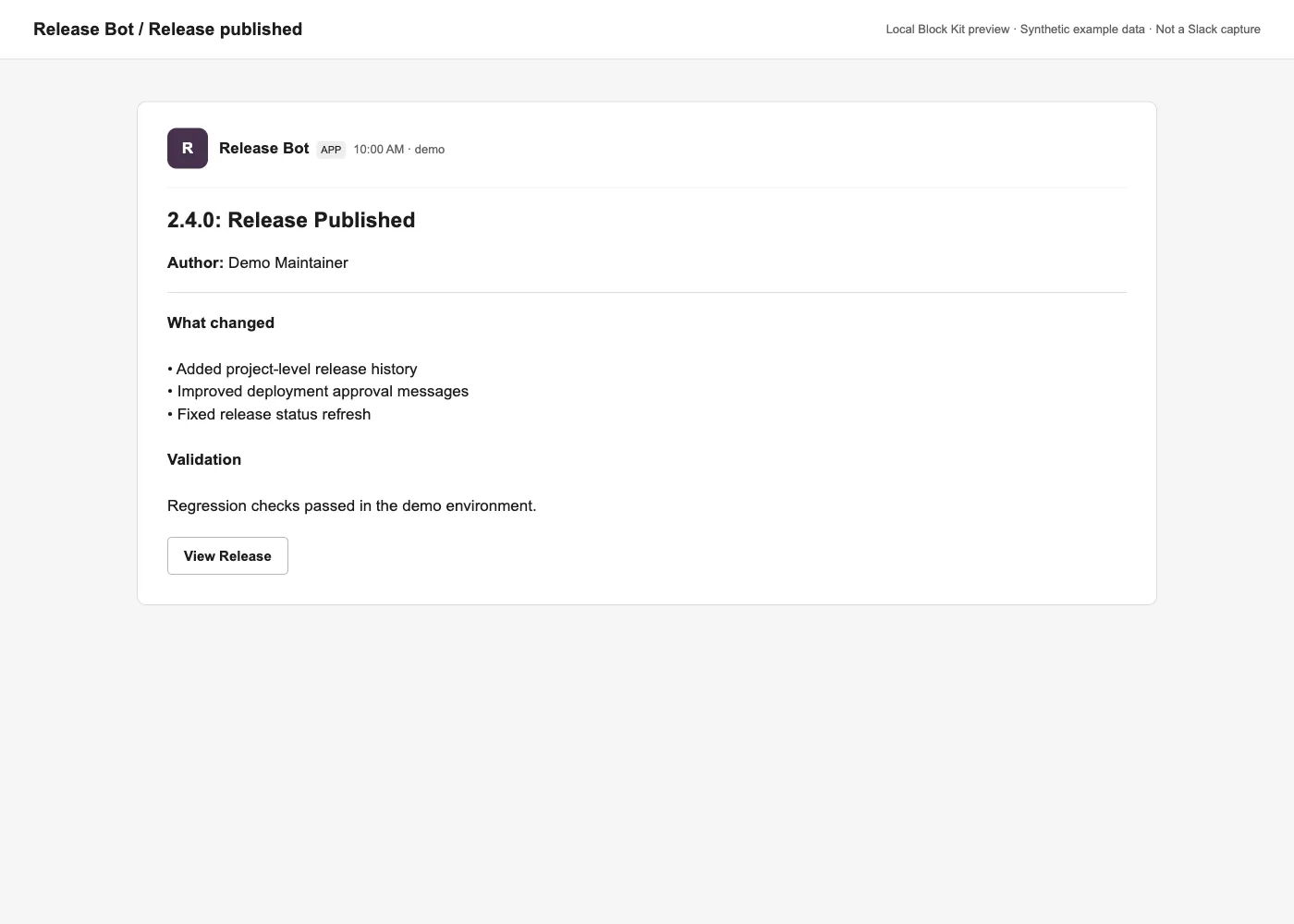
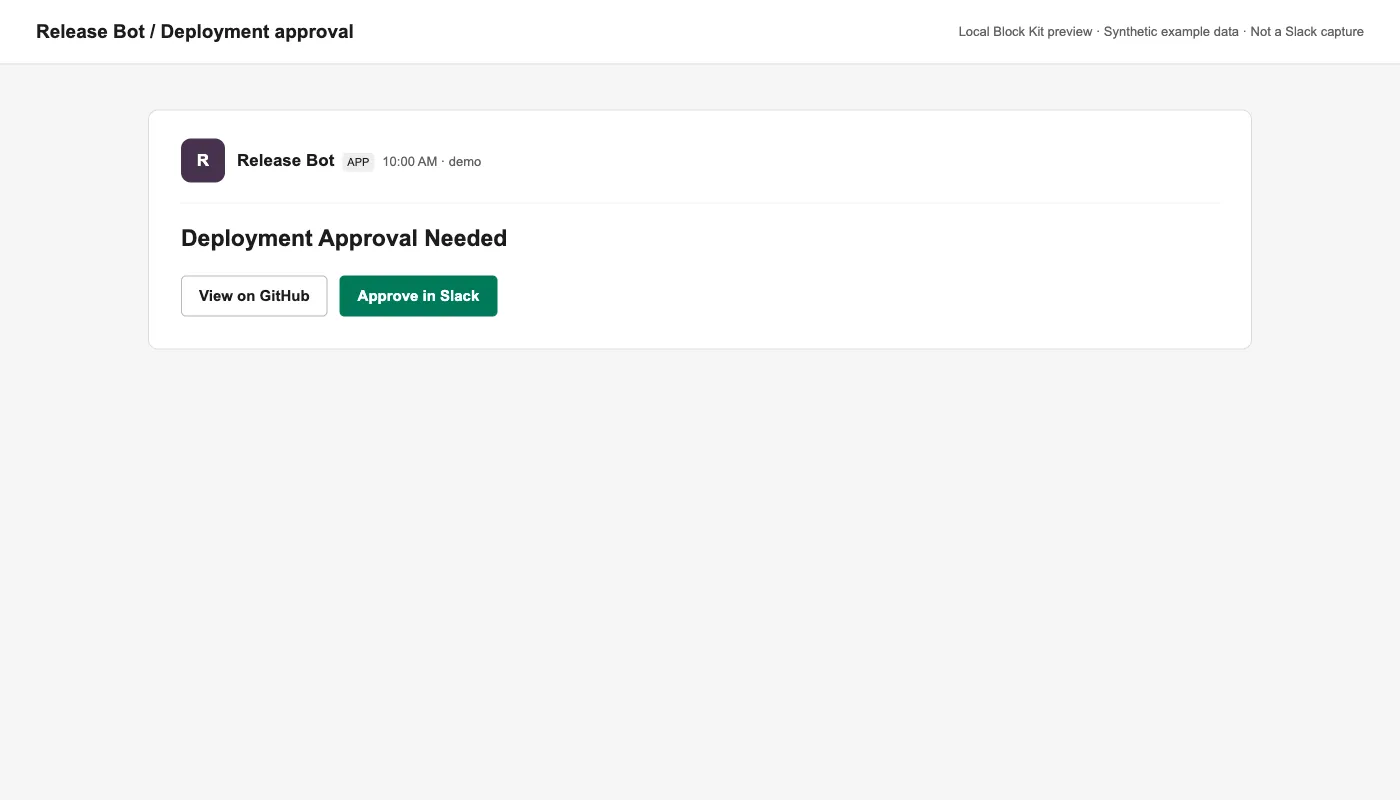
It produces Slack messages built with Block Kit and routed per event to the channels a team has configured. A release-published message carries the version, the author and the release notes. A deployment-approval message carries View on GitHub and Approve in Slack buttons. The messages also carry Slack Work Object metadata.
Writing is limited. Members of one configured Slack user group can use the write subcommands of a single /release-bot command, among them approve, teams, members and authenticate. A person links their own GitHub account before approving. Everyone can run the read-only status and list subcommands. The daily reminder runs at 09:30 Europe/Berlin and names the authors of included changes where their GitHub names are mapped to Slack people. The README states that reminders only send messages and that approvals and releases still need a person.
Curated GitHub Actions workflows are a configuration map of display names to workflow files, so adding one needs no code change.
The repository shows a TypeScript service on Node.js 22 built with NestJS, the Bolt.js Slack SDK and Octokit for GitHub App authentication, with Zod for configuration, SQLite for notification routing and encrypted user tokens, Vitest and Biome. It runs in Docker, uses Socket Mode for local development and HTTP in production, and exposes a health endpoint.
The two images below are local renders of the real message builders with synthetic content, not Slack screenshots. The release notes and validation line in them are fictional.
What I learned
The bot started with notifications and approvals and grew into team routing, reminders and a digest, because we saw the opportunity as we used it. We use it to fill gaps in our process and raise our cadence. It is not there to tell developers how they should work.
The bot never approves anything. Reminders only send messages, and an approval still needs a person with a linked GitHub account and the right group membership. It supports our process.
Evidence